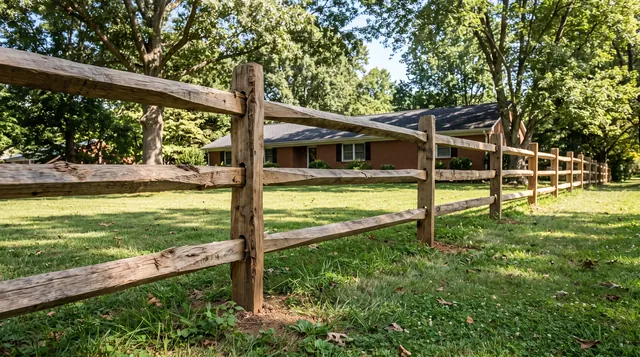
Charlottesville Fence & Gate offers fence and gate installation in Rivanna, VA, managing the work through fully licensed and insured contractors. Tell us what needs to change, then we can plan the route, material and openings around that purpose.
Start with the property, not just the panel
The Village of Rivanna has its own Albemarle development-area planning context. That planning label and a postal place name do not identify the covenants attached to a particular lot. Begin with the parcel and any applicable community documents.
A Rivanna request may involve a private yard edge beside a shared landscaped area. Keep ownership and maintenance rights separate from appearance. If the proposed fence closes a shortcut or reaches a common boundary, establish what can be built there before choosing the gate position.
For properties associated with Glenmore, obtain the actual private review requirements rather than carrying assumptions to every Rivanna or Keswick address. A screen, ornamental boundary and animal enclosure can need different designs even within the same community.
A layout decision to compare
Consider an open front boundary with enclosed side access. This is a planning example, not a claim about a completed customer job. A picket frontage preserves the open appearance while a side gate controls the route into the yard. Check the connection between those functions and show both on the submission drawing. The private approval decision and installation scope should refer to the same layout.
Discuss your Rivanna fence
Get an Estimate for Your Rivanna Property. Include the address, the purpose of the enclosure and the openings you need.
Separate public approval from private requirements
Begin with the jurisdiction for the actual address. A Charlottesville mailing address does not by itself tell you that the city administers the property. Building review, zoning restrictions, visibility near an entrance and any special property conditions are separate questions. An exemption from a building permit does not necessarily settle the others.
Association covenants and architectural review also operate separately from public approval. Obtain the requirements that apply to your property and submit the actual proposed design when a review is needed. Include the material, height, route and gate locations. Approval of a neighbor's fence, or a style visible elsewhere in the neighborhood, is not approval of yours. Keep the accepted drawing with the project information so the selected system and installed route can be checked against the same description.
Establish the route before placing the posts
A fence marks the line where it is built; it does not establish the legal property boundary. Start with the survey or plat and any recorded documents affecting the route. An old fence may have been placed inside the property, moved around a tree or built with a neighbor's informal agreement. A line on a public mapping website is useful for orientation, but it is not a substitute for resolving an uncertain boundary.
Identify the corners before ordering sections. If the route changes after the posts are set, the correction can involve more than moving a few boards. Gates, panel lengths and the appearance of the return all depend on those positions. Tell us about disputed or missing markers early so that the installation layout can wait for the right boundary evidence.
Set the frontage and the everyday opening
A picket fence defines an edge through its posts, rails and individual upright members. Picket shape, spacing and top profile influence the appearance, but the location of the line often matters more to everyday use. Leave room for the path, planting and the gate swing you need rather than treating the property edge as an automatic installation route.
Street-facing work needs a review of visibility and the public right-of-way. A low decorative fence can still be poorly placed near a driveway or corner. An existing hedge, sidewalk edge or mowing line is not reliable proof of the legal boundary. If the picket fence is also expected to contain an animal, evaluate the openings and ground gaps separately. The attractive front elevation and the functional enclosure should be part of the same accepted plan.
Keep a useful record of the finished scope
Keep the accepted route drawing, product identification and description of retained components together. If maintenance instructions are supplied for a finish or gate system, store them with that record. A future damaged-panel inquiry is easier to assess when the material and profile can be identified.
Photograph the completed line and gate arrangement for your own records. Do not use a photograph as a substitute for a survey or approval document; it records appearance, not the legal boundary. Note which old footings were removed and which were left in place if that was part of the scope. When later landscaping or building work is planned, that information can help explain what is already underground and what should be reviewed before the fence is altered.
Posts and footings carry the work
Posts support the fence, but they do not all carry the same load. A line post supports the intervening run. A corner, end or gate post may also resist tension, a change of direction or the weight of a moving gate. Simply matching the appearance of the existing posts does not establish that they are suitable for the new system.
Embedment and footing dimensions depend on the selected fence, soil, exposure and loads. A taller solid screen has different demands from an open rail boundary. Ground that looks firm at the surface can behave differently at the proposed footing. The specification should identify the installation method and the relevant product requirements. We work through those decisions with the installation contractor; a single universal hole depth is not an adequate plan for every property or gate.
Fence systems and access options
Compare wood, vinyl, aluminum and chain link for the yard. Gates belong in the initial layout. Horse fencing, commercial work and temporary construction enclosures have separate planning scopes.
How we handle a Rivanna project
Send the exact Rivanna address and photos from the entrance to the proposed line. We review the intended use, any retained fencing and the approach for installation. Identify the documents and review process for Albemarle County, along with any private requirements. The written scope brings those decisions together before the work is scheduled.
Questions about fencing in Rivanna
Do all Rivanna and Keswick addresses have Glenmore rules?
No shared assumption should be made. Identify the actual community and documents for the parcel before carrying a private requirement into the design.
Can a fence close a gap beside common landscaping?
Only after the ownership, recorded rights and applicable approval are understood. A gap that looks convenient may belong to a shared access or maintenance area.
Which parts of the scope should I settle first?
For an open front boundary with enclosed side access, begin with the purpose, proposed line and the access it needs. Compare the drawing with your boundary documents before choosing the final system.
What does residential fencing cost here?
Use a Charlottesville-area starting range of about $20 to $45 per linear foot for residential installation. Gates, removal and difficult site work add to the total. A commercial, equestrian or temporary-fencing project needs its own scope rather than the residential range.
Can I include a gate and existing-fence removal?
Yes. Mark the opening and the sections to remove on the Rivanna sketch. Specify what needs to pass through the gate, and ask for retained posts or concrete footings to be identified in the estimate.
Nearby service areas
- Fence Installation in Keswick, VA
- Fence Installation in Pantops, VA
- Fence Installation in Lake Monticello, VA
Plan the next step
- Fence planning guide for the Charlottesville area
- Fence installation cost in the Charlottesville area
- Fence utility locates and easements
Get an Estimate for Your Rivanna Fence. Send the location, approximate route and what you need the finished work to do.