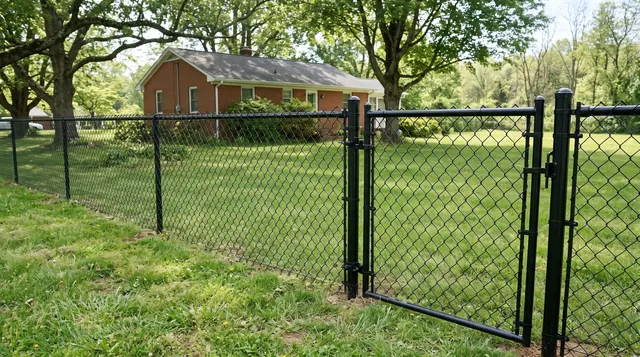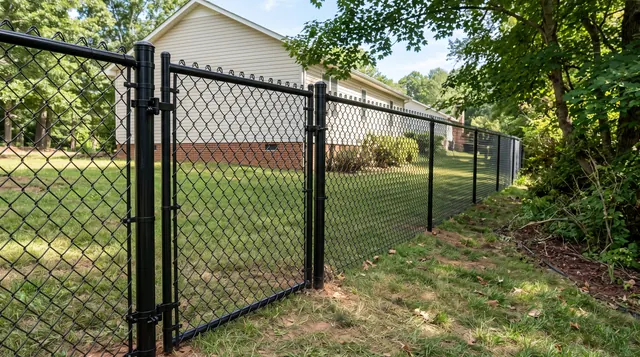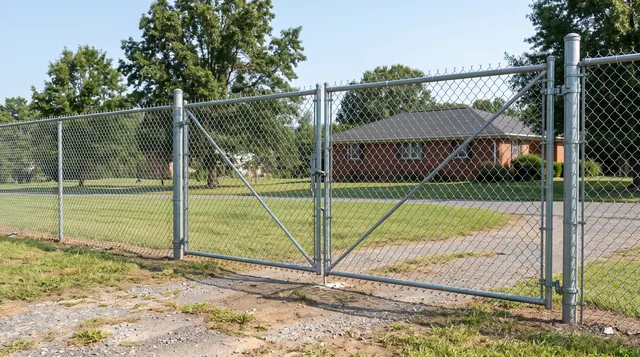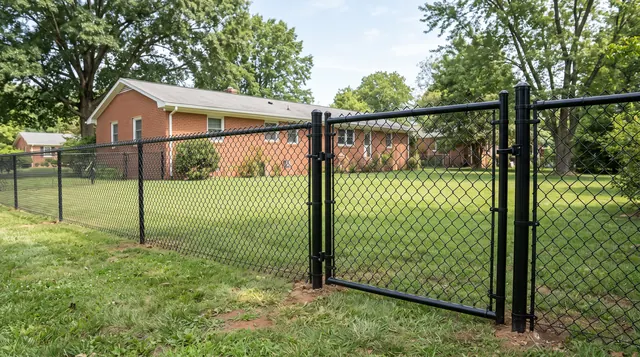
A practical enclosure still deserves a clear specification. Chain-link fencing can define a yard or business perimeter, but mesh, framework, coating and gates determine what is actually installed. Tell us who or what the boundary needs to contain and how people will pass through it.
Charlottesville Fence & Gate offers chain-link fence installation across Charlottesville and the surrounding service area. We manage the work through fully licensed and insured contractors.
Start with the finished result
A residential mesh fence, a commercial security perimeter and a temporary panel enclosure are different scopes. This page explains the chain-link system. Permanent business-property planning belongs on the commercial page, while portable construction panels belong on temporary fencing.
What happens at the project review
Send the project address, approximate footage and photos showing the line from both ends. Include the openings and the approach to the work area. We review the purpose, materials and retained components, then develop the installation scope. Any unresolved boundary, access or approval question stays visible before the layout is finalized.
Specify the fabric, framework and tensioning
Chain link is a system of mesh fabric supported by posts and rails or other specified members. Fabric gauge, mesh opening, coating and height affect what is being installed. Terminal posts at ends, corners and gates have different responsibilities from line posts supporting the intervening fabric.
Tension bars, bands, ties and any specified tension wire connect and stabilize the fabric. Tension wire is not a substitute for sound posts or the rest of the required framework. An estimate should identify the complete system rather than offer a length of mesh with undefined supports. If privacy slats or screening are proposed, include them at the design stage because they change the wind exposure of the fence. For an existing post line, condition, alignment and compatibility must be assessed before reuse is included.
Posts and footings carry the work
Posts support the fence, but they do not all carry the same load. A line post supports the intervening run. A corner, end or gate post may also resist tension, a change of direction or the weight of a moving gate. Simply matching the appearance of the existing posts does not establish that they are suitable for the new system.
Embedment and footing dimensions depend on the selected fence, soil, exposure and loads. A taller solid screen has different demands from an open rail boundary. Ground that looks firm at the surface can behave differently at the proposed footing. The specification should identify the installation method and the relevant product requirements. We work through those decisions with the installation contractor; a single universal hole depth is not an adequate plan for every property or gate.
Corners and transitions deserve a close look
A corner changes the direction of the fence and may also change the loads carried by its supports. A junction between materials can create a different spacing or attachment problem from a straight run. Those points deserve attention on the plan because they are where a simple per-foot description often leaves important work undefined.
Show connections to existing fencing, walls and buildings. Do not assume the new fence can be fixed to another structure without reviewing the attachment and ownership. Where a gap matters for containment, explain how the transition will close without blocking a drain or interfering with a moving gate. Where appearance matters most, compare the view of the corner from both sides. A consistent top line is useful, but it should not conceal an unsuitable support or an unworkable opening.
Give the opening its own specification
A gate is a moving assembly within a mostly stationary fence. Its frame, posts, hinges and latch need to work together at the chosen span. The usable opening is the clear space left for people or equipment after the supports and hardware are accounted for. It can differ from the nominal size used to describe the gate.
Show what must pass through: a mower, wheelbarrow, trailer or everyday pedestrian route. Also show where the leaf can move and where it will rest when open. Slope, planting and parked vehicles can interfere even when the closed gate looks well positioned. A latch should be reachable by the intended user without making the enclosure awkward to secure. Plan these details with the fence so that a convenient opening is not squeezed into the only remaining space.
Plan this project with us
Get an Estimate. Tell us what needs to change and send photos of the route and openings.
Match containment to the dog and the route
A dog enclosure needs more than a stated fence height. Look at openings below the fence, spaces beside posts, changes in grade and the gap at a closed gate. A small dog, a climber and a dog that pushes against the bottom present different questions. Describe the behavior you are trying to address without assuming that one material makes every yard secure.
Check the entire enclosure, including where a new section meets the house, an old fence or a retaining feature. A long sound run can still be defeated by one awkward transition. Plan how the dog stays separated from the work area during removal and installation, and do not rely on an unfinished fence for containment. Gates need an everyday closing routine that the household can actually follow. No fence eliminates the need to supervise animals and maintain the enclosure.
Screening changes views and structural loading
Privacy depends on the pattern as well as the material. Closely arranged boards or solid infill reduce sight lines. Spaced pickets and shadowbox arrangements can leave angled views, particularly when someone stands near the fence. Compare the view from the patio, nearby windows and higher ground before deciding how much screening the design provides.
Solid infill also changes the way wind acts on the fence. Adding slats, fabric or panels to an open system can increase the load on posts and connections. An existing fence that performs adequately without screening is not automatically suitable for the added surface. Choose a system designed for the intended arrangement and exposure. The estimate should describe the infill, supports and any transitions so the appearance decision is carried through into the installation specification.
Locate buried services before excavation
Post holes are small excavations, but a narrow hole can still conflict with a buried service. Arrange the required utility-locate process before digging and preserve the markings while the route is reviewed. A utility marking identifies a service concern; it does not verify the property boundary or authorize a change to the fence line.
Privately owned lines need attention too. Irrigation, lighting, a service to an outbuilding or other owner-installed equipment may need a separate locating arrangement. Tell us what you know about the yard and show any available records. If a proposed post conflicts with a service, the answer may involve changing the layout or the installation method. That decision belongs before excavation, with the affected service and property requirements understood, rather than after a hole has been started.
Make the estimate describe the same finished fence
A useful estimate identifies the route, footage, material, height, board or panel arrangement and gate openings. It should say what removal is included and what happens to old concrete. Finish work, survey services and approval fees should be visible rather than hidden in a vague expectation that everything is covered.
Compare proposals against that description. A lower total may reflect a different product, fewer gates or less removal. Ask about the difference before deciding that two prices cover the same work. For standard residential installation, the Charlottesville-area starting range is about $20 to $45 per linear foot. Gates and unusual site work add to that fence-run budget. Horse facilities, commercial security systems and temporary construction enclosures need their own project scope rather than a residential price applied to a different job.
Review the installed route and the moving parts
At completion, compare the installed work with the accepted layout and material description. Review the transitions, any retained components and the gate operation. A gate should be assessed through its travel, not only photographed in the closed position. Ask how the latch and any drop rods are intended to be used.
Keep the product information and agreed scope for future maintenance or a damaged-section inquiry. Report changes such as a dragging gate, loose attachment or moving post rather than forcing the opening or adding improvised hardware. The cause may be in the support, frame, ground or connection, and those require different responses. A completion review is also the time to settle the removal and cleanup items listed in the scope, including what has deliberately remained below ground.
Compare the actual choices
| Choice | Useful when | Check before deciding |
|---|---|---|
| Residential enclosure | Yard boundary | Fabric, framework and ground gaps |
| Permanent commercial perimeter | Occupied business property | Security objective and vehicle access |
| Portable temporary panels | Construction phase | Bases, duration and retrieval |
Questions about chain-link fence installation
Does a darker coating change the fence system?
The finish is one specification. Compare fabric, framework and hardware too; color alone does not define gauge, strength or installation quality.
Can privacy slats be added?
Include the proposed slats in the design review. Added screening changes wind loading and may require a different support arrangement.
What should I send for an estimate?
Send the address, a sketch or approximate length, photos and the purpose of the fence. Mark each gate and any old fencing to remove.
What can change the installation method?
The chosen system, ground conditions, slope and access can change how the work is carried out. Those items belong in the scope before installation.
Can the new work connect to another fence?
Show the junction and identify who owns the retained section. Its condition and attachment details need review before a connection is accepted.
Related services and planning
- Gate Installation in Charlottesville, VA
- Fence Replacement in Charlottesville, VA
- Temporary and Construction Fencing in Charlottesville, VA
- Fence planning guide for the Charlottesville area
- Fence installation cost in the Charlottesville area
Get an Estimate for Chain-Link Fence Installation. Send the location and the result you want from the finished work.