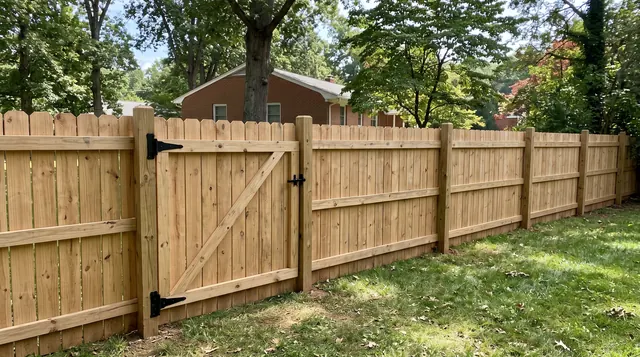
Utility locating and easement review address different risks. Locate buried services before excavation, and check recorded rights that may limit a fence route or require ongoing access. A marked utility line is not a property survey, and a clear locate does not erase an easement.
Charlottesville Fence & Gate helps property owners plan fence and gate work across the Charlottesville area, with installation managed through fully licensed and insured contractors.
The decision to work through
An easement can affect more than the location of a post. A gate, removable section or changed route may be relevant where an authorized party needs access, but the recorded terms and responsible party determine what is acceptable. Do not assume that a fence already crossing the area proves the new proposal is allowed.
Locate buried services before excavation
Post holes are small excavations, but a narrow hole can still conflict with a buried service. Arrange the required utility-locate process before digging and preserve the markings while the route is reviewed. A utility marking identifies a service concern; it does not verify the property boundary or authorize a change to the fence line.
Privately owned lines need attention too. Irrigation, lighting, a service to an outbuilding or other owner-installed equipment may need a separate locating arrangement. Tell us what you know about the yard and show any available records. If a proposed post conflicts with a service, the answer may involve changing the layout or the installation method. That decision belongs before excavation, with the affected service and property requirements understood, rather than after a hole has been started.
Establish the route before placing the posts
A fence marks the line where it is built; it does not establish the legal property boundary. Start with the survey or plat and any recorded documents affecting the route. An old fence may have been placed inside the property, moved around a tree or built with a neighbor's informal agreement. A line on a public mapping website is useful for orientation, but it is not a substitute for resolving an uncertain boundary.
Identify the corners before ordering sections. If the route changes after the posts are set, the correction can involve more than moving a few boards. Gates, panel lengths and the appearance of the return all depend on those positions. Tell us about disputed or missing markers early so that the installation layout can wait for the right boundary evidence.
Bring the plan into focus
Get an Estimate. Send the address, photos and the question you are trying to resolve.
Plan the route for materials and equipment
The installation route is not always the same as the delivery route. A driveway may accommodate a vehicle while a narrow side passage limits what can reach the fence line. Steps, overhead branches, soft ground and an existing gate can change the handling or excavation method.
Send photos showing the approach from the street as well as the proposed fence. Tell us what must be protected, where materials can be staged and whether another owner controls any part of the access. Permission to enter a neighboring yard or shared drive should be settled before the work is scheduled. Do not assume a public path or open space is available for delivery. With access understood, the scope can describe the method and any necessary protection rather than build an estimate around equipment that cannot reach the work.
Corners and transitions deserve a close look
A corner changes the direction of the fence and may also change the loads carried by its supports. A junction between materials can create a different spacing or attachment problem from a straight run. Those points deserve attention on the plan because they are where a simple per-foot description often leaves important work undefined.
Show connections to existing fencing, walls and buildings. Do not assume the new fence can be fixed to another structure without reviewing the attachment and ownership. Where a gap matters for containment, explain how the transition will close without blocking a drain or interfering with a moving gate. Where appearance matters most, compare the view of the corner from both sides. A consistent top line is useful, but it should not conceal an unsuitable support or an unworkable opening.
Keep a useful record of the finished scope
Keep the accepted route drawing, product identification and description of retained components together. If maintenance instructions are supplied for a finish or gate system, store them with that record. A future damaged-panel inquiry is easier to assess when the material and profile can be identified.
Photograph the completed line and gate arrangement for your own records. Do not use a photograph as a substitute for a survey or approval document; it records appearance, not the legal boundary. Note which old footings were removed and which were left in place if that was part of the scope. When later landscaping or building work is planned, that information can help explain what is already underground and what should be reviewed before the fence is altered.
Recorded easement restrictions can affect access
Easement restrictions can limit where a fence is placed or require continued access through the area. Read the recorded terms and resolve the proposal with the responsible party. A removable section or access gate is an option to discuss, not a universal way to satisfy every easement. Utility clearance, ownership and recorded rights need to be resolved separately before the route is fixed.
Questions before you decide
What information is most useful at the start?
The address, proposed route, intended purpose and photos help define the question. Add the product information or existing-fence details when you have them.
Can a photograph settle the whole scope?
Photos help with the first discussion, but they do not establish hidden conditions, boundaries or approval. Keep those questions separate from the appearance of the fence.
What is the next step?
Choose the outcome you need, identify the unresolved decisions and request an estimate with that information. The written scope should describe the system and work before installation.
Related service and guides
- Fence Installation in Charlottesville, VA
- Fence planning guide for the Charlottesville area
- Fence installation cost in the Charlottesville area
- Survey before fence installation
- What happens during fence installation
Get an Estimate. Tell us where the property is and what needs to change.