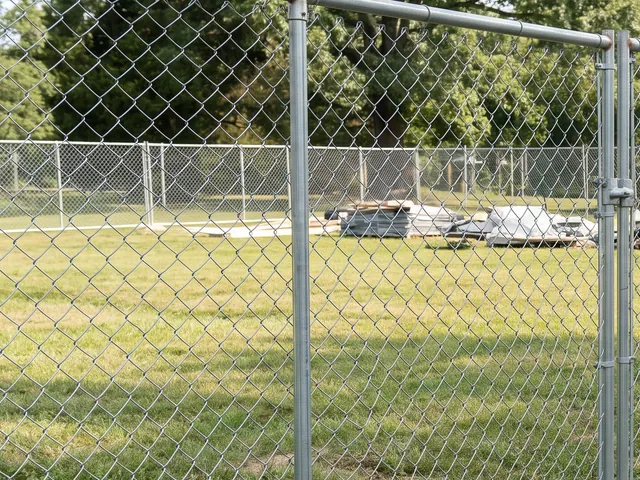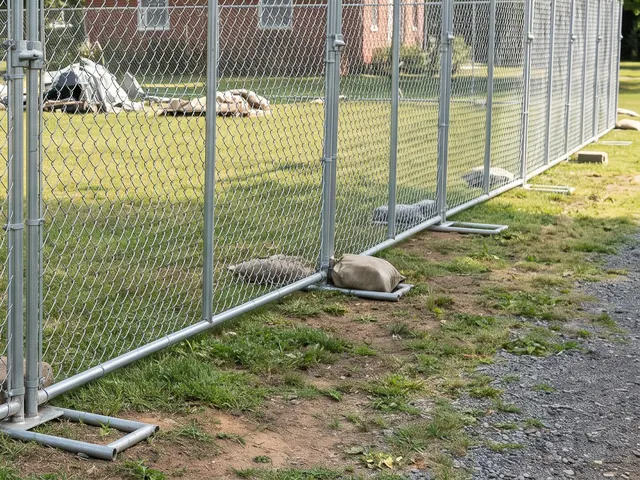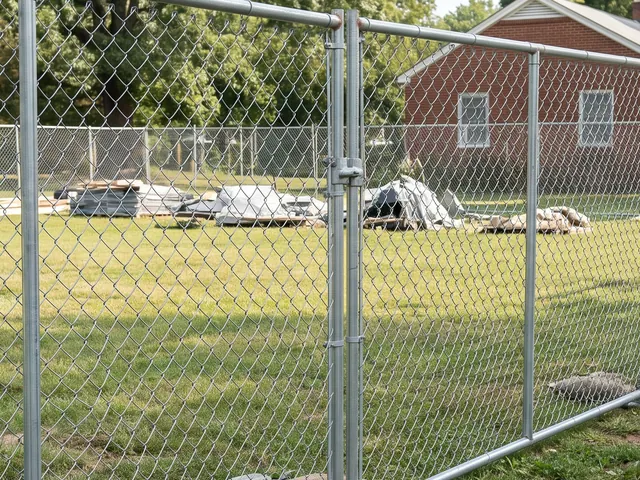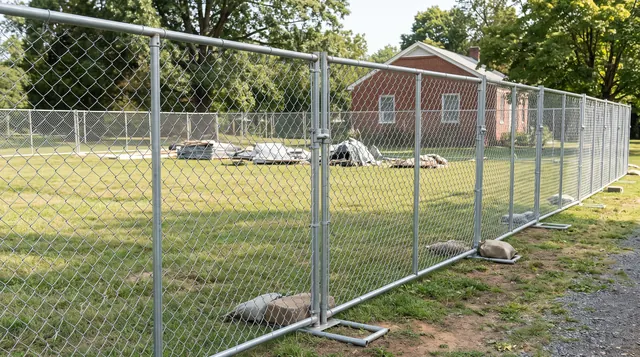
A construction project needs a working perimeter before the permanent layout exists. Temporary panels can define the jobsite, but delivery access, pedestrian routes and changing work phases need to be planned with them. Tell us when the boundary is needed and how it may move during the project.
Charlottesville Fence & Gate offers temporary and construction fencing across Charlottesville and the surrounding service area. We manage the work through fully licensed and insured contractors.
Start with the finished result
We manage temporary fence installation inquiries across the Charlottesville area through licensed and insured contractors. Portable chain-link and welded-wire panel systems are considered with their bases, connectors and access gates. Rental supply and terms are confirmed for the project; a request does not assume owned stock or immediate availability.
What happens at the project review
Send the project address, approximate footage and photos showing the line from both ends. Include the openings and the approach to the work area. We review the purpose, materials and retained components, then develop the installation scope. Any unresolved boundary, access or approval question stays visible before the layout is finalized.
A temporary perimeter has a beginning and an end
Construction-site fencing needs a layout for the current phase of work and a plan for what happens as the project changes. Portable chain-link or welded-wire panels can provide an enclosure without becoming the permanent property boundary. Their bases, connectors, braces and gates still need to form a coherent system.
Identify the installation date you need, expected duration and any planned relocations. Separate the pedestrian entrance from the vehicle opening where the site plan calls for it. Panel feet and stabilizers occupy space, so include them when checking paths and access. The scope should describe delivery, setup, moves and removal or retrieval. A request for temporary fence rental should also state whether supply, installation or both are needed; availability and terms must be confirmed for that particular project.
Screening and exposed panels need stability review
Screening fabric changes how wind loads a temporary fence. A freestanding panel that is suitable in one configuration is not automatically suitable with a banner or opaque screen attached. Bases, braces, anchors and connections must follow the selected system and the site-specific arrangement.
Review the ground and the space available on each side. A stabilizer can interfere with a walkway or work route if its footprint is ignored. Where anchors penetrate the ground, buried services and permission to disturb the surface need to be addressed before installation. Do not attach an improvised weight or extra screening and assume it improves the system. If the fence moves, is struck or loses a connection, keep people away from the affected section and have the condition addressed before relying on the perimeter again.
Give the opening its own specification
A gate is a moving assembly within a mostly stationary fence. Its frame, posts, hinges and latch need to work together at the chosen span. The usable opening is the clear space left for people or equipment after the supports and hardware are accounted for. It can differ from the nominal size used to describe the gate.
Show what must pass through: a mower, wheelbarrow, trailer or everyday pedestrian route. Also show where the leaf can move and where it will rest when open. Slope, planting and parked vehicles can interfere even when the closed gate looks well positioned. A latch should be reachable by the intended user without making the enclosure awkward to secure. Plan these details with the fence so that a convenient opening is not squeezed into the only remaining space.
Keep the business working through the installation
An occupied business needs more than a new perimeter drawing. Identify deliveries, employee entrances, customer routes and the times when access must remain available. A gate that suits the final layout can still obstruct a loading operation if the installation sequence is not coordinated.
For replacement work, decide which areas can be opened and which need separation throughout the job. Identify responsibility for securing the property at each pause in the work. A temporary construction enclosure and a permanent security fence have different systems and scopes, even when both use chain-link material. Describe the security goal honestly: a fence can define and manage an access boundary, but it does not by itself guarantee that theft, climbing or unauthorized entry cannot occur. Additional requirements need to be specified rather than implied by the word commercial.
Plan this project with us
Get an Estimate. Tell us what needs to change and send photos of the route and openings.
Locate buried services before excavation
Post holes are small excavations, but a narrow hole can still conflict with a buried service. Arrange the required utility-locate process before digging and preserve the markings while the route is reviewed. A utility marking identifies a service concern; it does not verify the property boundary or authorize a change to the fence line.
Privately owned lines need attention too. Irrigation, lighting, a service to an outbuilding or other owner-installed equipment may need a separate locating arrangement. Tell us what you know about the yard and show any available records. If a proposed post conflicts with a service, the answer may involve changing the layout or the installation method. That decision belongs before excavation, with the affected service and property requirements understood, rather than after a hole has been started.
Plan the route for materials and equipment
The installation route is not always the same as the delivery route. A driveway may accommodate a vehicle while a narrow side passage limits what can reach the fence line. Steps, overhead branches, soft ground and an existing gate can change the handling or excavation method.
Send photos showing the approach from the street as well as the proposed fence. Tell us what must be protected, where materials can be staged and whether another owner controls any part of the access. Permission to enter a neighboring yard or shared drive should be settled before the work is scheduled. Do not assume a public path or open space is available for delivery. With access understood, the scope can describe the method and any necessary protection rather than build an estimate around equipment that cannot reach the work.
Corners and transitions deserve a close look
A corner changes the direction of the fence and may also change the loads carried by its supports. A junction between materials can create a different spacing or attachment problem from a straight run. Those points deserve attention on the plan because they are where a simple per-foot description often leaves important work undefined.
Show connections to existing fencing, walls and buildings. Do not assume the new fence can be fixed to another structure without reviewing the attachment and ownership. Where a gap matters for containment, explain how the transition will close without blocking a drain or interfering with a moving gate. Where appearance matters most, compare the view of the corner from both sides. A consistent top line is useful, but it should not conceal an unsuitable support or an unworkable opening.
Keep the household out of the work area
Before installation, decide how people and animals will use the property while materials and open holes are present. Move portable items from the agreed work route and identify fragile planting or equipment that needs protection. Do not move utility markings or boundary markers while clearing the yard.
If the old fence contains a pet, plan a separate arrangement before removal starts. A partially completed run does not provide the same enclosure as the finished system. Tell us about shared entrances and any access another person controls. Work limits should be clear to everyone using the property, including where materials can be left between visits. These preparations reduce avoidable interruptions and help the installation stay within the agreed route without treating the entire yard as an unrestricted staging area.
Keep a useful record of the finished scope
Keep the accepted route drawing, product identification and description of retained components together. If maintenance instructions are supplied for a finish or gate system, store them with that record. A future damaged-panel inquiry is easier to assess when the material and profile can be identified.
Photograph the completed line and gate arrangement for your own records. Do not use a photograph as a substitute for a survey or approval document; it records appearance, not the legal boundary. Note which old footings were removed and which were left in place if that was part of the scope. When later landscaping or building work is planned, that information can help explain what is already underground and what should be reviewed before the fence is altered.
Compare the actual choices
| Choice | Useful when | Check before deciding |
|---|---|---|
| Freestanding panels | Portable enclosure on suitable ground | Base and brace footprint |
| Screened temporary system | Visual separation is required | Wind exposure and manufacturer configuration |
| Permanent fence | Long-term property perimeter | Separate posts, gates and installation scope |
Supply choices and condition responsibility
Rental versus purchase scope should be stated explicitly, together with setup, moves and retrieval. Construction fencing and temporary fencing are consolidated here because the portable installation intent is the same. Panel condition affects inspection and maintenance responsibilities: identify who checks bases, connectors, braces and gates during the project, how a damaged section is isolated and who arranges correction. A rental extension does not automatically include relocating panels or adding screening. Confirm those changes as part of the project scope.
Questions about temporary and construction fencing
Can I rent the fence?
Include rental in the request, with length, duration and location. Availability, supply, setup and retrieval need to be confirmed in the proposal.
What happens if the job runs longer?
Ask for extension, minimum-term and relocation arrangements before accepting the scope. Do not assume the original duration covers an open-ended project.
What should I send for an estimate?
Send the address, a sketch or approximate length, photos and the purpose of the fence. Mark each gate and any old fencing to remove.
What can change the installation method?
The chosen system, ground conditions, slope and access can change how the work is carried out. Those items belong in the scope before installation.
Can the new work connect to another fence?
Show the junction and identify who owns the retained section. Its condition and attachment details need review before a connection is accepted.
Related services and planning
- Gate Installation in Charlottesville, VA
- Fence Replacement in Charlottesville, VA
- Commercial Fencing in Charlottesville, VA
- Fence planning guide for the Charlottesville area
- Fence installation cost in the Charlottesville area
Get an Estimate for Temporary and Construction Fencing. Send the location and the result you want from the finished work.