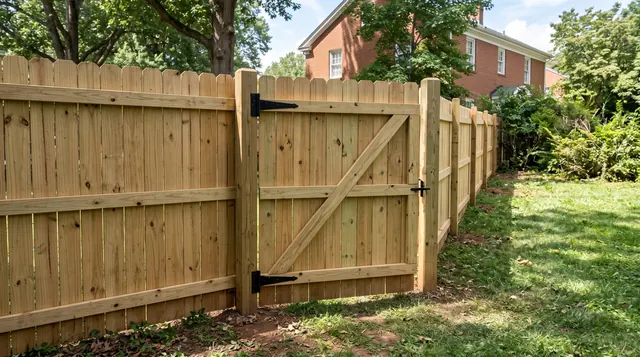
A dragging gate can result from hinge movement, a distorted frame, a moving post or a ground-clearance problem. Inspect the whole assembly through an appropriate professional review rather than assuming a new latch will correct it. Keep people and animals away from a loose or unstable gate.
Charlottesville Fence & Gate helps property owners plan fence and gate work across the Charlottesville area, with installation managed through fully licensed and insured contractors.
The decision to work through
Describe whether the latch stopped meeting, the opening narrowed or the leaf began touching the ground. Include photographs of the supports and the whole frame. Gate weight acts through the hinges, so weak support or poor geometry can show up as a problem at the far corner. Do not force the leaf, climb it or add a wheel without checking the cause and intended system.
A symptom is a starting point, not a diagnosis
A leaning post, dragging gate or damaged panel can have several causes. The visible problem may be local, or it may reflect movement in supports that affects adjoining sections. Replacing the most obvious piece without reviewing the connections can leave the underlying issue in place.
Describe what changed and when you noticed it. Photos of the whole run, the supports and the ground are more useful than one close-up alone. A repair decision depends on the condition of the retained system and whether compatible parts are available. Replacement may make more sense when the material or layout no longer serves the property. Until a damaged enclosure is addressed, use another appropriate means of containing pets or separating access. Do not push or climb a loose section to test its strength.
Give the opening its own specification
A gate is a moving assembly within a mostly stationary fence. Its frame, posts, hinges and latch need to work together at the chosen span. The usable opening is the clear space left for people or equipment after the supports and hardware are accounted for. It can differ from the nominal size used to describe the gate.
Show what must pass through: a mower, wheelbarrow, trailer or everyday pedestrian route. Also show where the leaf can move and where it will rest when open. Slope, planting and parked vehicles can interfere even when the closed gate looks well positioned. A latch should be reachable by the intended user without making the enclosure awkward to secure. Plan these details with the fence so that a convenient opening is not squeezed into the only remaining space.
Bring the plan into focus
Get an Estimate. Send the address, photos and the question you are trying to resolve.
Posts and footings carry the work
Posts support the fence, but they do not all carry the same load. A line post supports the intervening run. A corner, end or gate post may also resist tension, a change of direction or the weight of a moving gate. Simply matching the appearance of the existing posts does not establish that they are suitable for the new system.
Embedment and footing dimensions depend on the selected fence, soil, exposure and loads. A taller solid screen has different demands from an open rail boundary. Ground that looks firm at the surface can behave differently at the proposed footing. The specification should identify the installation method and the relevant product requirements. We work through those decisions with the installation contractor; a single universal hole depth is not an adequate plan for every property or gate.
Follow the grade without losing the purpose
Ground level can change significantly between the ends of a fence run. A rackable system follows a slope within the limits of its particular panels. A stepped layout keeps sections level and changes elevation between them. Neither approach automatically solves every problem: stepping can leave a larger space under a panel, while racking changes the relationship between the infill and the ground.
The right choice depends on what the enclosure must do. A decorative boundary may tolerate a gap that would defeat a small-dog enclosure. A privacy screen can lose coverage when the viewer stands uphill. Review the route from both sides and include the gate area, where a moving leaf needs clearance through its entire travel. The final layout should describe these transitions rather than leave them to be improvised after the posts are installed.
Review the installed route and the moving parts
At completion, compare the installed work with the accepted layout and material description. Review the transitions, any retained components and the gate operation. A gate should be assessed through its travel, not only photographed in the closed position. Ask how the latch and any drop rods are intended to be used.
Keep the product information and agreed scope for future maintenance or a damaged-section inquiry. Report changes such as a dragging gate, loose attachment or moving post rather than forcing the opening or adding improvised hardware. The cause may be in the support, frame, ground or connection, and those require different responses. A completion review is also the time to settle the removal and cleanup items listed in the scope, including what has deliberately remained below ground.
Questions before you decide
What information is most useful at the start?
The address, proposed route, intended purpose and photos help define the question. Add the product information or existing-fence details when you have them.
Can a photograph settle the whole scope?
Photos help with the first discussion, but they do not establish hidden conditions, boundaries or approval. Keep those questions separate from the appearance of the fence.
What is the next step?
Choose the outcome you need, identify the unresolved decisions and request an estimate with that information. The written scope should describe the system and work before installation.
Related service and guides
- Gate Installation in Charlottesville, VA
- Fence planning guide for the Charlottesville area
- Fence installation cost in the Charlottesville area
- Survey before fence installation
- What happens during fence installation
Get an Estimate. Tell us where the property is and what needs to change.