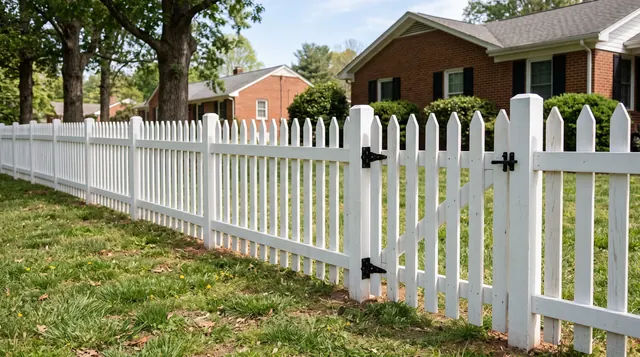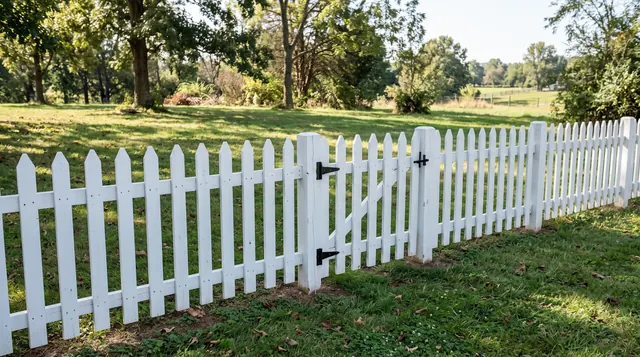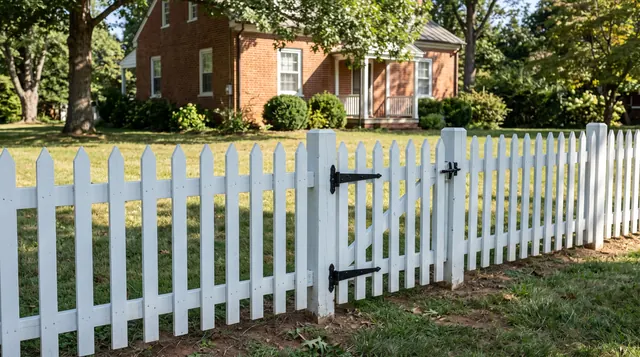
A picket fence can give the front yard a clear edge without closing off the house. The gate position and relationship to paths are often more important than the decorative top. We plan the frontage around how you enter, maintain and use the garden.
Charlottesville Fence & Gate offers picket fence installation across Charlottesville and the surrounding service area. We manage the work through fully licensed and insured contractors.
Start with the finished result
Wood and vinyl pickets offer different maintenance and assembly choices. Picket spacing also affects visibility and containment. If the fence must keep a dog inside, say so before the decorative pattern is selected.
What happens at the project review
Send the project address, approximate footage and photos showing the line from both ends. Include the openings and the approach to the work area. We review the purpose, materials and retained components, then develop the installation scope. Any unresolved boundary, access or approval question stays visible before the layout is finalized.
Set the frontage and the everyday opening
A picket fence defines an edge through its posts, rails and individual upright members. Picket shape, spacing and top profile influence the appearance, but the location of the line often matters more to everyday use. Leave room for the path, planting and the gate swing you need rather than treating the property edge as an automatic installation route.
Street-facing work needs a review of visibility and the public right-of-way. A low decorative fence can still be poorly placed near a driveway or corner. An existing hedge, sidewalk edge or mowing line is not reliable proof of the legal boundary. If the picket fence is also expected to contain an animal, evaluate the openings and ground gaps separately. The attractive front elevation and the functional enclosure should be part of the same accepted plan.
Choose the wood and the board arrangement together
Pressure-treated pine and cedar are different material choices, not interchangeable labels for the same board. Treatment, grade, moisture condition and the intended use matter. Wood in contact with the ground needs the appropriate specification, and exterior fasteners must be compatible with the wood and any treatment. Ask for those details instead of comparing a price that says only wood fence.
The board pattern changes the result too. Board-on-board overlaps pickets to reduce direct gaps. A shadowbox alternates boards across the rails and gives a different appearance from each viewing angle. Stockade describes a close-board arrangement; a lattice-top design adds an upper element that needs its own support and overall-height review. Cedar or redwood availability, grade and suitability should be checked before a particular species is put into the accepted scope.
Treat vinyl as a complete panel system
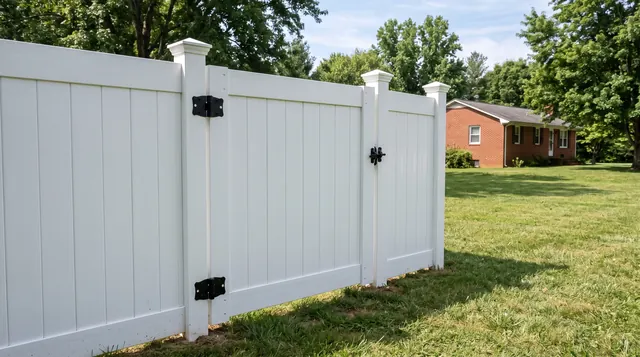
Vinyl fencing is assembled from components designed to work together: posts, rails, infill and any specified reinforcement. A vinyl sleeve does not tell you what support is inside it. Gate posts in particular may need a different arrangement from the posts along a straight run. The accepted product specification should make that distinction clear.
Thermal movement, rail engagement and fastening details follow the manufacturer's system. Mixing parts because they look similar can leave an uncertain connection. On a slope, confirm whether the chosen product racks, steps or requires another treatment. Also ask what happens if a panel is damaged later: a matching replacement section may depend on the profile and product line. Keep the product identification with the project paperwork so a future repair conversation can begin with the actual system.
Put the walk gate on the route people use
An everyday gate should connect useful places: the back door and path, the driveway and yard, or the garden and tool storage. A convenient position reduces the temptation to leave the opening unsecured. Check the space with the leaf open as well as closed so it does not occupy the only standing room or catch on planting.
Plan for the things people carry or push through. A clear opening that works for walking may not accommodate a wheelbarrow or mower. Hinges, stops and the latch need to suit the frame and the intended use. Do not rely on a residential yard-gate detail for a swimming-pool barrier; that use has separate requirements for the complete barrier and gate arrangement. Explain the purpose at the start so the chosen opening is appropriate before the fence line is fixed.
Plan this project with us
Get an Estimate. Tell us what needs to change and send photos of the route and openings.
Establish the route before placing the posts
A fence marks the line where it is built; it does not establish the legal property boundary. Start with the survey or plat and any recorded documents affecting the route. An old fence may have been placed inside the property, moved around a tree or built with a neighbor's informal agreement. A line on a public mapping website is useful for orientation, but it is not a substitute for resolving an uncertain boundary.
Identify the corners before ordering sections. If the route changes after the posts are set, the correction can involve more than moving a few boards. Gates, panel lengths and the appearance of the return all depend on those positions. Tell us about disputed or missing markers early so that the installation layout can wait for the right boundary evidence.
Separate public approval from private requirements
Begin with the jurisdiction for the actual address. A Charlottesville mailing address does not by itself tell you that the city administers the property. Building review, zoning restrictions, visibility near an entrance and any special property conditions are separate questions. An exemption from a building permit does not necessarily settle the others.
Association covenants and architectural review also operate separately from public approval. Obtain the requirements that apply to your property and submit the actual proposed design when a review is needed. Include the material, height, route and gate locations. Approval of a neighbor's fence, or a style visible elsewhere in the neighborhood, is not approval of yours. Keep the accepted drawing with the project information so the selected system and installed route can be checked against the same description.
Match containment to the dog and the route
A dog enclosure needs more than a stated fence height. Look at openings below the fence, spaces beside posts, changes in grade and the gap at a closed gate. A small dog, a climber and a dog that pushes against the bottom present different questions. Describe the behavior you are trying to address without assuming that one material makes every yard secure.
Check the entire enclosure, including where a new section meets the house, an old fence or a retaining feature. A long sound run can still be defeated by one awkward transition. Plan how the dog stays separated from the work area during removal and installation, and do not rely on an unfinished fence for containment. Gates need an everyday closing routine that the household can actually follow. No fence eliminates the need to supervise animals and maintain the enclosure.
Corners and transitions deserve a close look
A corner changes the direction of the fence and may also change the loads carried by its supports. A junction between materials can create a different spacing or attachment problem from a straight run. Those points deserve attention on the plan because they are where a simple per-foot description often leaves important work undefined.
Show connections to existing fencing, walls and buildings. Do not assume the new fence can be fixed to another structure without reviewing the attachment and ownership. Where a gap matters for containment, explain how the transition will close without blocking a drain or interfering with a moving gate. Where appearance matters most, compare the view of the corner from both sides. A consistent top line is useful, but it should not conceal an unsuitable support or an unworkable opening.
Review the installed route and the moving parts
At completion, compare the installed work with the accepted layout and material description. Review the transitions, any retained components and the gate operation. A gate should be assessed through its travel, not only photographed in the closed position. Ask how the latch and any drop rods are intended to be used.
Keep the product information and agreed scope for future maintenance or a damaged-section inquiry. Report changes such as a dragging gate, loose attachment or moving post rather than forcing the opening or adding improvised hardware. The cause may be in the support, frame, ground or connection, and those require different responses. A completion review is also the time to settle the removal and cleanup items listed in the scope, including what has deliberately remained below ground.
Compare the actual choices
| Choice | Useful when | Check before deciding |
|---|---|---|
| Wood pickets | Flexible board appearance | Species and finish care |
| Vinyl pickets | Coordinated panel system | Product reinforcement and repair parts |
| Open decorative boundary | Define the frontage | Separate containment review |
Questions about picket fence installation
Can a picket fence contain my dog?
That depends on the dog, openings, height and ground transitions. A decorative appearance alone does not establish suitability.
Can the gate line up with my front path?
That is a useful starting point. Check the swing, standing space and route to the door before fixing the posts.
What should I send for an estimate?
Send the address, a sketch or approximate length, photos and the purpose of the fence. Mark each gate and any old fencing to remove.
What can change the installation method?
The chosen system, ground conditions, slope and access can change how the work is carried out. Those items belong in the scope before installation.
Can the new work connect to another fence?
Show the junction and identify who owns the retained section. Its condition and attachment details need review before a connection is accepted.
Related services and planning
- Gate Installation in Charlottesville, VA
- Fence Replacement in Charlottesville, VA
- Wood Fence Installation in Charlottesville, VA
- Fence planning guide for the Charlottesville area
- Fence installation cost in the Charlottesville area
Get an Estimate for Picket Fence Installation. Send the location and the result you want from the finished work.