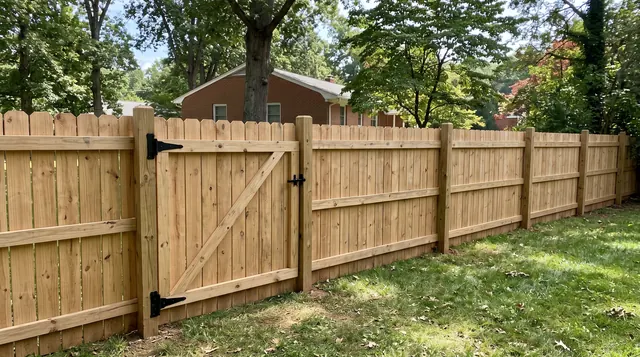
Treat the complete pool barrier as a separate safety and approval question. Fence openings, climbable features, gate operation and the surrounding layout all matter. Check the requirements for the address and the selected system before using a general yard fence as a pool enclosure.
Charlottesville Fence & Gate helps property owners plan fence and gate work across the Charlottesville area, with installation managed through fully licensed and insured contractors.
The decision to work through
The U.S. Consumer Product Safety Commission explains barrier concepts, including controlled access and the importance of the gate arrangement. That guidance helps frame the review but does not replace the applicable local requirements or inspection. Charlottesville Fence & Gate can discuss the fence-planning questions; a pool-specific service scope must be confirmed before installation is accepted.
Pool use changes the entire barrier discussion
A pool barrier is a coordinated enclosure, including gates and any other elements that form part of it. A decorative fence, a dog fence or a tall panel should not be assumed to satisfy that separate purpose. Openings, climbable features, gate operation and the layout around the pool all need review under the requirements applicable to the property.
Raise the pool use before selecting the product. Official safety guidance helps explain the questions, but the local authority and the actual installation requirements govern the project. Keep the pool protected while adjacent fence work is underway and arrange an appropriate alternative barrier when needed. This planning information is not a substitute for an inspection or a claim that an unreviewed fence is compliant. A pool-specific installation scope must be confirmed before that work is accepted.
Give the opening its own specification
A gate is a moving assembly within a mostly stationary fence. Its frame, posts, hinges and latch need to work together at the chosen span. The usable opening is the clear space left for people or equipment after the supports and hardware are accounted for. It can differ from the nominal size used to describe the gate.
Show what must pass through: a mower, wheelbarrow, trailer or everyday pedestrian route. Also show where the leaf can move and where it will rest when open. Slope, planting and parked vehicles can interfere even when the closed gate looks well positioned. A latch should be reachable by the intended user without making the enclosure awkward to secure. Plan these details with the fence so that a convenient opening is not squeezed into the only remaining space.
Bring the plan into focus
Get an Estimate. Send the address, photos and the question you are trying to resolve.
Separate public approval from private requirements
Begin with the jurisdiction for the actual address. A Charlottesville mailing address does not by itself tell you that the city administers the property. Building review, zoning restrictions, visibility near an entrance and any special property conditions are separate questions. An exemption from a building permit does not necessarily settle the others.
Association covenants and architectural review also operate separately from public approval. Obtain the requirements that apply to your property and submit the actual proposed design when a review is needed. Include the material, height, route and gate locations. Approval of a neighbor's fence, or a style visible elsewhere in the neighborhood, is not approval of yours. Keep the accepted drawing with the project information so the selected system and installed route can be checked against the same description.
Corners and transitions deserve a close look
A corner changes the direction of the fence and may also change the loads carried by its supports. A junction between materials can create a different spacing or attachment problem from a straight run. Those points deserve attention on the plan because they are where a simple per-foot description often leaves important work undefined.
Show connections to existing fencing, walls and buildings. Do not assume the new fence can be fixed to another structure without reviewing the attachment and ownership. Where a gap matters for containment, explain how the transition will close without blocking a drain or interfering with a moving gate. Where appearance matters most, compare the view of the corner from both sides. A consistent top line is useful, but it should not conceal an unsuitable support or an unworkable opening.
Keep the household out of the work area
Before installation, decide how people and animals will use the property while materials and open holes are present. Move portable items from the agreed work route and identify fragile planting or equipment that needs protection. Do not move utility markings or boundary markers while clearing the yard.
If the old fence contains a pet, plan a separate arrangement before removal starts. A partially completed run does not provide the same enclosure as the finished system. Tell us about shared entrances and any access another person controls. Work limits should be clear to everyone using the property, including where materials can be left between visits. These preparations reduce avoidable interruptions and help the installation stay within the agreed route without treating the entire yard as an unrestricted staging area.
Questions before you decide
What information is most useful at the start?
The address, proposed route, intended purpose and photos help define the question. Add the product information or existing-fence details when you have them.
Can a photograph settle the whole scope?
Photos help with the first discussion, but they do not establish hidden conditions, boundaries or approval. Keep those questions separate from the appearance of the fence.
What is the next step?
Choose the outcome you need, identify the unresolved decisions and request an estimate with that information. The written scope should describe the system and work before installation.
Related service and guides
- Fence Installation in Charlottesville, VA
- Fence planning guide for the Charlottesville area
- Fence installation cost in the Charlottesville area
- Survey before fence installation
- What happens during fence installation
Get an Estimate. Tell us where the property is and what needs to change.